This is the third essay in a three-part series. Read Part I here and Part II here.
Eliot’s Rejection of Unitarianism
Eliot was famously conservative, and this political stance firmly countered the social progressivism of his grandfather and mother. His Unitarian circle believed that reason, argument, and effort could reform the world, and that their religion not only inspired them in this duty but uniquely fitted them to such work. The progressivism of Eliot’s grandfather and mother were grounded not only in a Unitarian faith that urged social reform, but in their own successful experiences in political and social action. They threw their energies into projects whose effects could readily be seen: William Greenleaf Eliot preached against slavery and built buildings and institutions; Charlotte Eliot reformed St. Louis’s justice system for juveniles and served on multiple committees of social action (After his mother’s death, T. S. Eliot recalled with pride her leadership in juvenile court reform in a letter to the St. Louis Post-Dispatch).
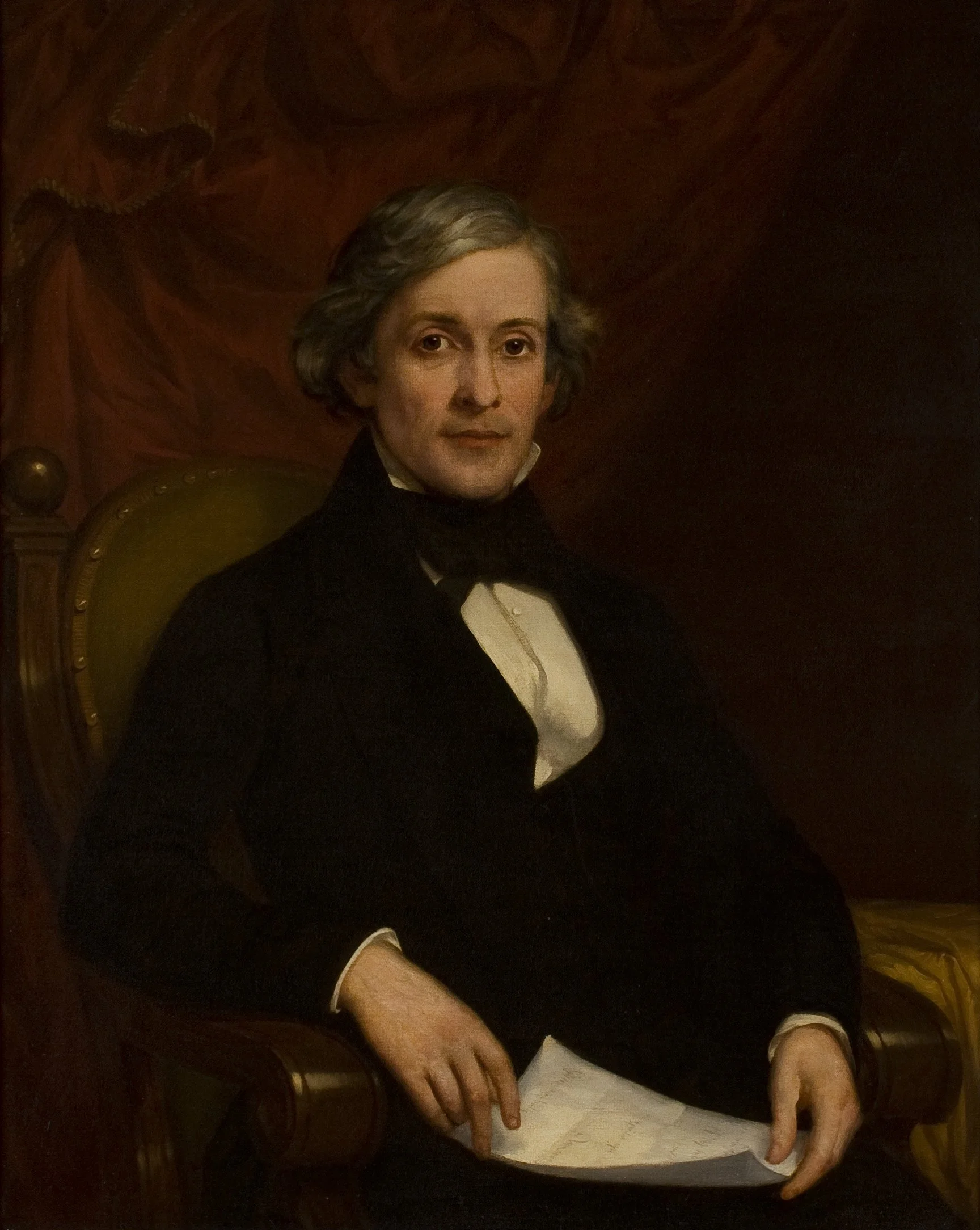
John Cranch’s portrait of William Greenleaf Eliot, grandfather of T. S. Eliot, c. 1840
T. S. Eliot’s experience was quite different, as Frances Dickey sensibly observes in her forthcoming book, Prelude in St. Louis: T. S. Eliot’s First City. Seeing no improvement in social conditions in St. Louis, Boston, Paris, or London, he rejected the belief in progress. He was less optimistic than his Unitarian peers about the certainty of reform—his work as an editor and writer was more critical than constructive.
Anglican T. S. Eliot felt that Unitarianism’s greatest weaknesses were its materialist basis, its ignorance of the metaphysical, and its callow attitude to sin and suffering:
In the Puritan morality that I remember, it was tacitly assumed that if one was thrifty, enterprising, intelligent, practical and prudent in not violating social conventions, one ought to have a happy and “successful” life. Failure was due to some weakness or perversity peculiar to the individual; but the decent man need have no nightmares.
Likewise, Eliot describes a turn-of-the century Unitarianism when he complains that it was concerned only with “‘right and wrong,’ what was ‘done and not done’” rather than with good or evil. The discarding of metaphysical ethics for a more flexible social code was recognizably late-century Unitarian: it served the mercantile interests of its bourgeois practitioners.
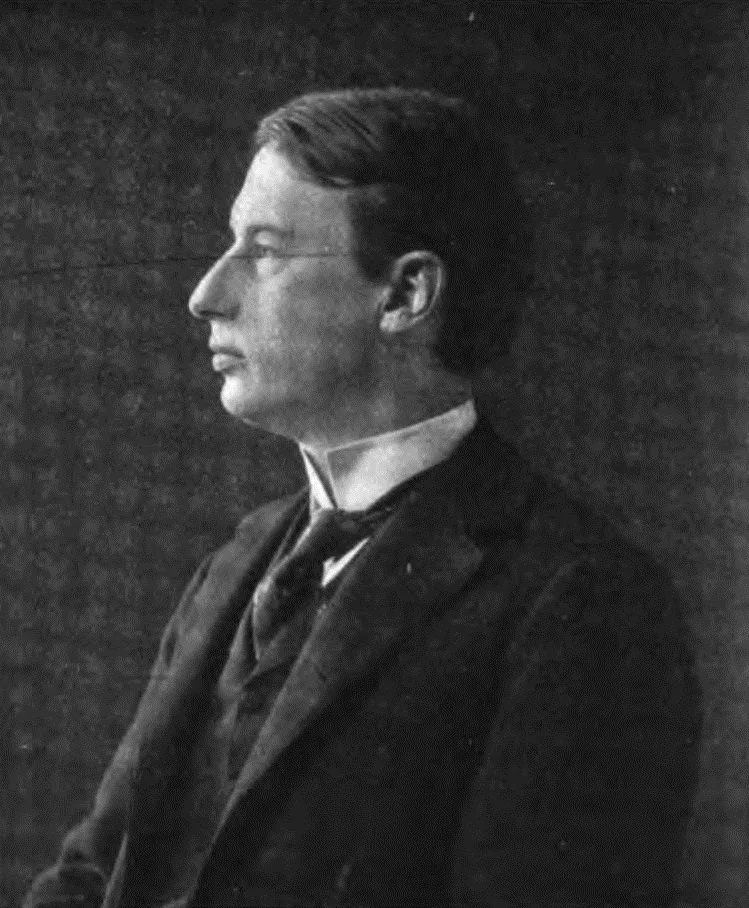
Photograph of Paul Elmer More, c. 1904
Eliot’s later rejection of Unitarianism was rooted in moral, metaphysical and aesthetic concerns. However, while the Anglican Eliot often expressed his irritation with Unitarian gentility and materialism, it was the aesthetic poverty of Unitarianism that he describes as an emotional scar. He makes a telling confession of such in a letter to Paul Elmer More, a spiritual mentor. Having read More’s recently published memoir in The American Review, Eliot was struck by the similarity of their biographies: both were born and raised in St. Louis, both were from a Calvinist background soaked in reason, both were educated at Harvard, and both had become Anglo-Catholic. But for Eliot, there was an even more uncanny resemblance:
What touches me most closely is a suggestion, here and there, of a spiritual biography which, if I may say so without presumption, is oddly, even grotesquely, more like my own, so far as I can see, than that of any human being I have known. And when you say
‘I have often wondered what line my experience might have taken had I been brought up in a form of worship from which the office of the imagination and of the aesthetic emotions had not been so ruthlessly evicted…’
I have made the same speculation. But I am inclined to think that I know how to value these things better, just for having (being me) to struggle so long, and for so many years so blindly and errantly, towards them.
It is not merely a lack of beauty the two ex-Unitarians resent, but the emotional pain that cramped their souls. Had his imagination not been so ruthlessly pruned, More’s life, Eliot speculates, might have moved happily towards “that form of wondering faith which we distinguish by the name of sacramentalism.” Eliot’s critique of Unitarianism’s aesthetic poverty—and the moral and emotional consequences that follow from it—was as withering as More’s. He arrived at it in 1916, long before his conversion in 1927:
“For the boy whose childhood has been empty of beauty, the boy who has never learned the detached curiosity for beauty, the sexual instinct when it is aroused may mean the only possible escape from a prosaic world.”
McDonagh’s book provides a useful corrective to the idea that modernist converts were primarily interested in liturgical beauty. But Eliot’s and More’s complaints get at something deeper. They were not just seeking beautiful ritual, “merely aesthetic religious needs” in McDonagh’s phrase: their Unitarianism had deprived them of a sacramental approach to the beauty of the entire world and their own imaginative response to it. It was not a lack of good church music and rich vestments that hampered Eliot and More, but a worldview that was transactional, materialistic, and aridly ethical. In choosing Anglo-Catholicism, they were not primarily exchanging pedantic, wordy services for luxurious, sensuous ritual. They were liberating themselves from everything liberal Protestantism had to offer: its capitalist worldview that was materialist and transactional; its vaguely theist theology, in which God has nothing to say to the believer, and neither reason nor means for intervening; its liberal progressivism, which promised a utopian world devoid of suffering and sin; and its optimism, which corresponded to no reality that either Eliot or More could recognize. “I was myself brought up in a strong atmosphere of the most liberal Liberal theology,” Eliot spat in 1924, three years before his conversion, “and I cannot but regard such tendencies as unsuitable to the needs of the time.”
One of the needs of the time was authority, and McDonagh argues that the authority of Roman Catholicism was exactly what many converts were looking for. By the late nineteenth century, an epistemological revolution was nearly accomplished: the old ways of being and knowing based on religious authority, hierarchical forms of government, fixed gender norms, and strict sexual boundaries were ceding to scientific, medical, and technological ideologies. The industrial revolution and the logic of capitalism ploughed aside everything in their paths. Mass culture, mass literacy, and women in the voting booth and workplace upended the Victorian social order. In such a confusing era, a search for authority and stability was common.
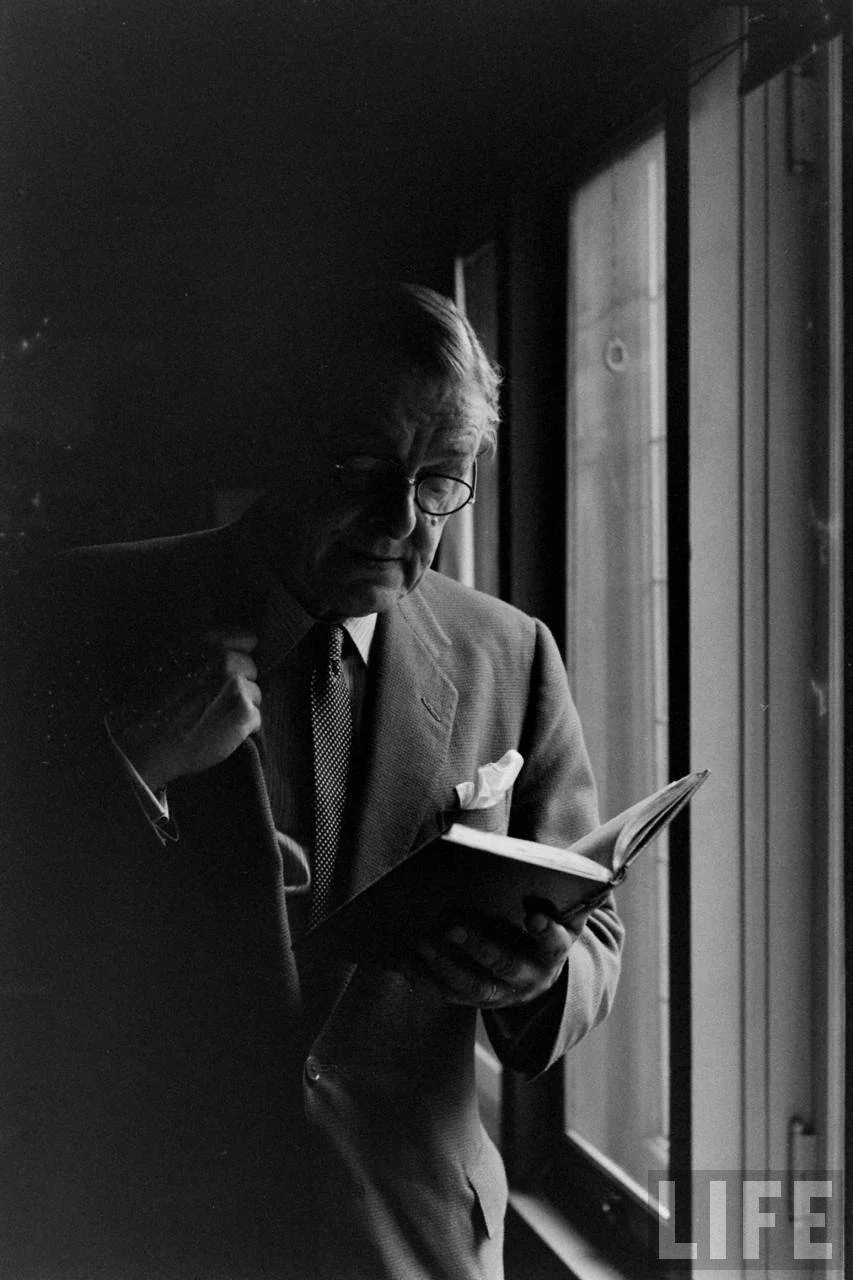
Photograph of T. S. Eliot for Life, CC. 4.0

In his spiritual life and professional world, Eliot was certainly among those searching for authority and security. However, with Eliot as an example, and with the purview of converts widened to include other orthodox churches, perhaps we might find that sacramental theology and the metaphysical worldview, more than authority, was what Eliot and others were seeking. Or perhaps we would find that it was not authority for its own sake, but an authority that could legitimize a sacramental and metaphysical worldview. Long before his conversion, Eliot had walked away from a whole congeries of political, ideological, and theological ideas when he rejected Unitarianism. Political and social notions of inevitable progress, liturgies devoid of ritual and beauty, and theological trust in human goodness and reason were all things he no longer had any use for. It would take several more years for Eliot to settle in the Anglican Church. But by clearing out ideas and tendencies that were “unsuitable to the needs of the time,” he was preparing himself to discover a sacramental and mystery-based approach to the physical and metaphysical world.