The Genealogies of Modernity Journal


Strange Rites in a Spiritual Wilderness
The language all of these “pagans” use, and every other Western reaction against Christianity, remains Christian. Perhaps we don’t escape our history after all.
Micah Meadowcroft reviews Tara Isabella Burton’s Strange Rites.

Different Modernities in India
A central concern remains: the timing and nature of India’s encounter with modernity. Did modernity come with the East India Company or did modernity have more ‘native’ roots?
Devin Creed looks for a different modernity in the streets of New Delhi.

Constructing Chivalry
Chivalry is an attempt to internalize restraints so that powerful men police one another and themselves—masculinity taming the excesses of masculinity.
Kathryn Mogk reassesses chivalry amidst the Me-Too era and deepening concerns about police violence.

A Mobile Proposal
We may still take the best of what calling cards have to offer: a more robust etiquette for managing our digital, social lives on a more humane timescale.
Kirsten Hall loses her phone and looks to the 18th Century for guidance.


Modernity Is a Word of Crisis: Cyril O’Regan on Christian Memory
What O’Regan emphasizes for Christian genealogy is the work of memory. We all too easily forget; we are all tempted by misremembering. We must keep vigil for the return of our Master.
Terence Sweeney reviews Exorcising Philosophical Modernity.
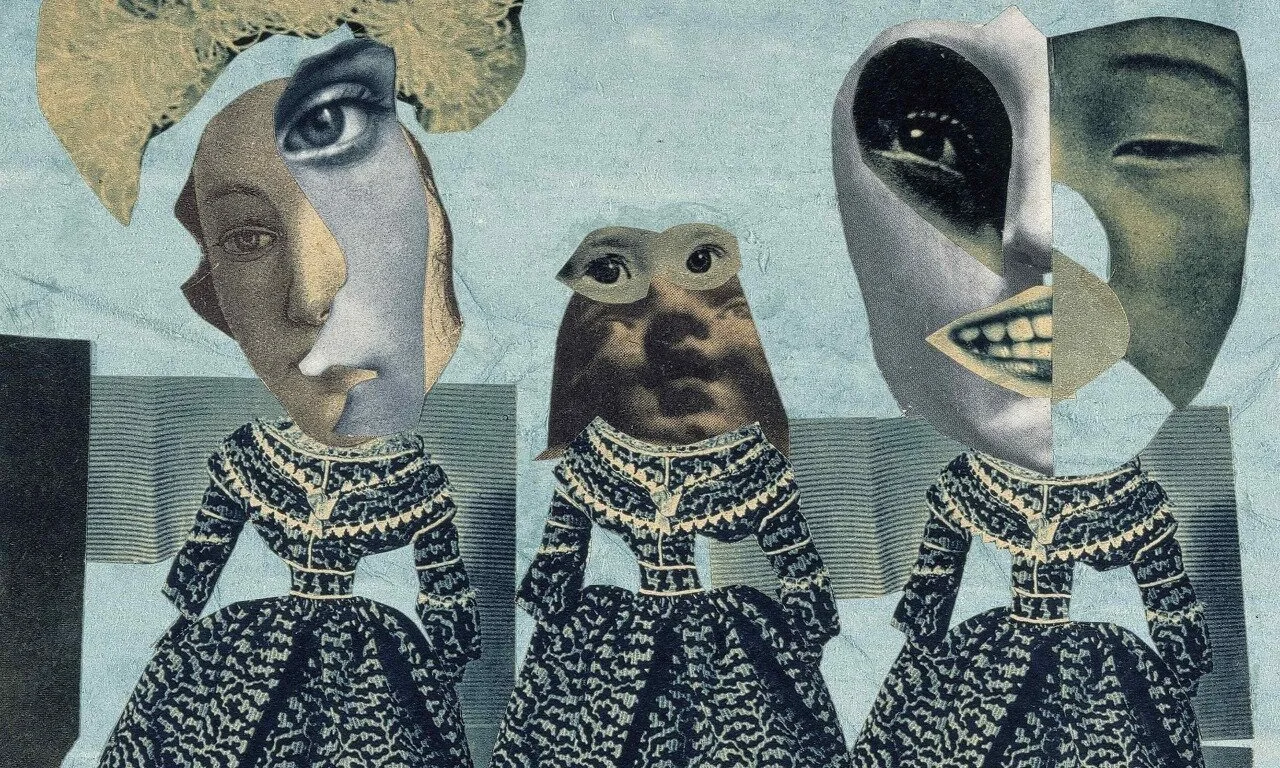
How We Became Superstitious Again: A Genealogical Fable
Millions waited for a new, unknown magic to save the world from a final tragedy. The occultic had returned, but no one knew how to see it anymore.
Jason Blakely imagines the rise and fall of science and the occult.

Relearning How to Read
Ultimately, nobody is interested in hermeneutics and intertextuality for their own sake … but everyone wants to know what is real and how we should live, and if books can help us there, interpretation becomes intensely interesting.
Kathryn Mogk rediscovers reading with Augustine.

On the Ambiguity of Conversion
By understanding phenomenology first and foremost as possibility, it is possible to recover its capacity for converting us to the real.
Humberto González Núñez reviews Edward Baring’s Converts to the Real.

Ten Thousand Angels and Comic-Book Theodicy
The paradox of theodicy is that the truly memorable parts are not the resolutions but the unresolved tensions that no literary narrative or philosophical formulation can fully address.
Chris Fite on the theodicy of comic-book universes.

Neither Modern nor Post-Modern: Newman on Certitude
“Far better for a true philosopher to admit that our ordinary way of thinking is not only rational, but actually more rational because more complete.”
David P. Deavel writes on John Henry Newman’s understanding of certitude.

Exterior View: Pierre Soulages’s Conques Windows
The windows at Conques, seen from the outside, seem to be walled with a metal sheet.
Donato Loia examines the old and the new with Pierre Soulages’s modernist windows in a Romanesque church.


Hope Amidst Helplessness
Dark as this may seem, it opens the door to the only true agency that we have in such circumstances: the choice between hope and despair, between faith and doubt.
Micah Heinz reads Albert Camus during the Coronavirus.

Science, Magic, and the Atom in Tomorrowland
Disney’s atom acts as an all-powerful sentient being, radioisotopes resemble the magical dust of Tinkerbell, and atomic energy emerges as the ultimate transmutation of matter that can lead to limitless health and wealth.
Christopher Fite finds a mix of power, ideology, and racism in a Disney film

Art and Religion in the Time of Plague
Tracing art’s genealogy, we find that she is not the sister of religion, an equal rival, but a daughter.
Kathryn Mogk reads Station Eleven during the coronavirus.

You Must Wager: A Genealogy of Commitment
If people choose to go on speaking nonsense, that’s just part of the game. What ‘One True Life’ offers is an invitation to play a different one, the stakes of which could not be higher.
Taylor Ross reviews One True Life and finds we must change our lives.

Toward a Hopeful Decadence
Douthat begs us to consider the possibilities that we reached for in the past, less out of nostalgia, and more as inspiration: a cry of ‘Why not?’ that can lift us beyond screens, comfort, and deadlock toward a common goal.
Michael J. Nevadomski reviews Ross Douthat’s The Decadent Society.

End without End: Mourning during the Coronavirus
For however emptied out a religious rite might appear, it still confirms that the unnamable experience of death has a place within the universe.
Donato Loia reflects on rituals of death in the modern world.

The Racialization of Crime: A Brief Genealogy
The racialization of crime in the United States can be traced all the way back to the earliest legislation directly addressing race relations: the slave codes.
Miranda Pilipchuk traces a genealogy of racism and sexism in the American judicial system.