This is the third essay in our July–August 2026 forum on Personalism and the Catholic Worker.
Pope Pius X’s letter to the French bishops
The emerging crisis between the Sillon and the Church that I outlined in the previous essay eventually came to a head on 25 August 1910, when Pope Pius X issued the apostolic letter Notre charge apostolique (Our Apostolic Duty), calling on the Sillon leaders to place the movement under the control of the French bishops. Indeed, from Pope Pius X’s point of view, the most serious offense of the Sillon was its alleged “pretension to escape the jurisdiction of ecclesiastical authority.” The apostolic letter condemned “the false hopes of the Sillon on human dignity” and especially its egalitarian model of education in which a member achieved “independent consciousness … without a master, obeying only himself.” Even more seriously, it criticized members of the clergy who had joined Le Sillon study circles: “the priest, on entering, lowers the eminent dignity of his priesthood and, by a strange reversal of roles, becomes a student, placing himself on a level with his young friends, and is no more than a comrade.” For the pope, all this amounted to nothing more than a “mere verbal and chimerical construction in which we shall see, glowing in a jumble, and in seductive confusion, the words Liberty, Justice, Fraternity, Love, Equality, and human exultation, all resting upon an ill-understood human dignity.” “Yes, we can truly say that the Sillon, its eyes fixed on a chimera, brings Socialism in its train,” Pius X warned and lamented.
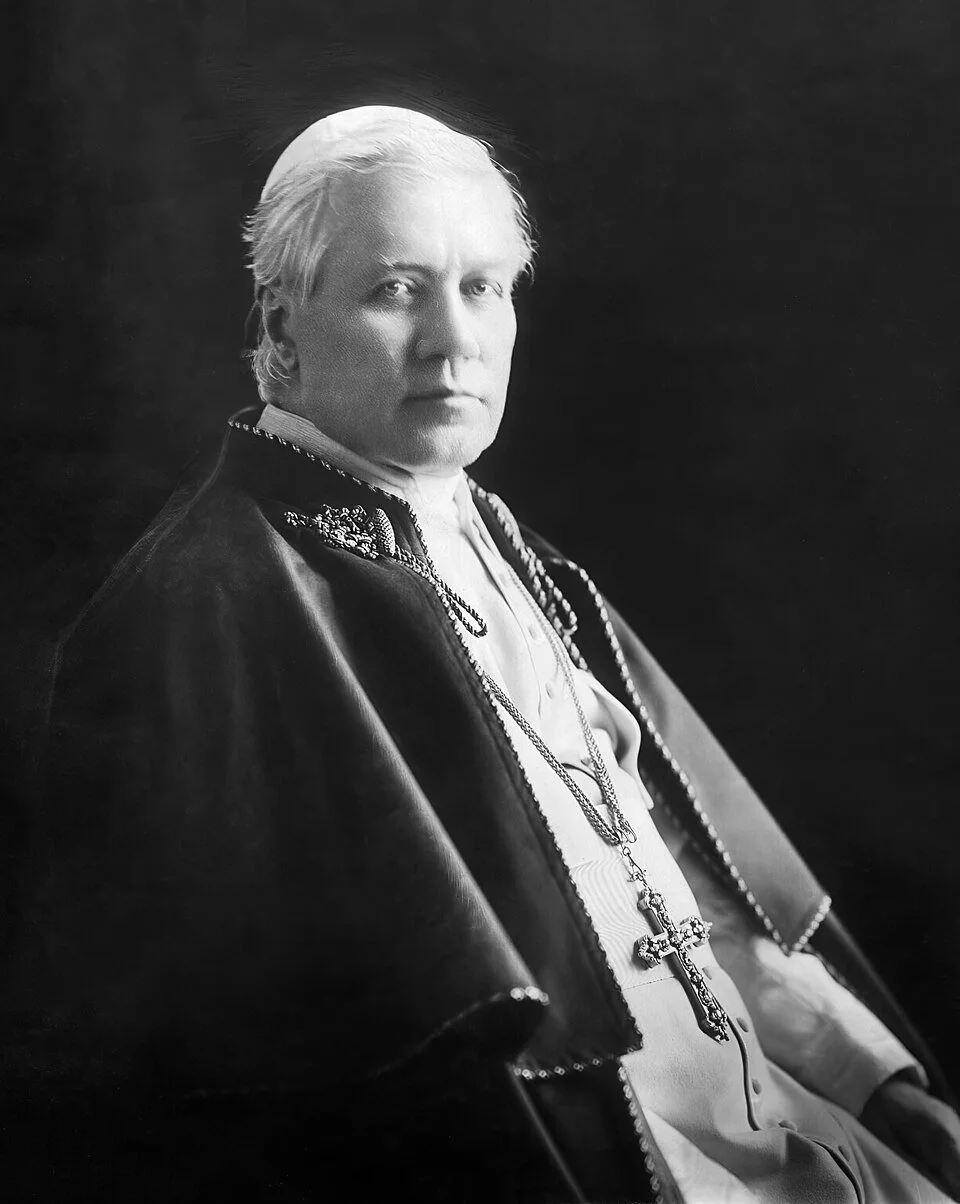
Photograph of Pope Pius X by Ernest Walter Histed, 1914
To the surprise, if not the amazement, of many, the response of Marc Sangnier and his colleagues was immediate acceptance of and complete submission to the pope’s demands. In truth, the Sillon leadership had long anticipated and prepared for such an outcome. Nevertheless, when it finally came it was a huge blow. Sangnier himself later credited a special grace received through the not yet canonized Thérèse of Lisieux for his equanimity.
As far away as Bergamo, Italy, a young priest, Fr. Angelo Roncalli, who had heard Sangnier speak in Rome in 1903–1904 and was himself heavily involved in Catholic action in his home diocese, found himself deeply impressed by the sacrifice of the Sillon leaders. Forty years later, as nuncio to France, the future Pope John XXIII would write movingly to Marc Sangnier’s widow, Renée: “His noble and frank humility in later accepting the admonition of the holy Pope Pius X—moreover, a very affectionate and well-meaning admonition—were the true measure of his greatness in my eyes.”
Yet the Sillon was not completely extinguished. In 1912, Sangnier and his colleagues launched a new secular movement, La Jeune République, continuing the Sillon’s democratic work in the political sphere. During the 1920s, he went on to organise a series of highly influential international peace congresses whose work was endorsed by both Pope Benedict XV and Pope Pius XI. Seeking to build friendship between the former enemies of France and Germany after the First World War, he launched a youth hostel movement called the Auberges de Jeunesse as well as a new youth movement called Volontaires de la Paix (Peace Volunteers). Meanwhile, another former Sillon leader, Jules Rimet, sought to achieve a similar objective by organizing an international soccer competition that we know today as the FIFA World Cup.
When World War II broke out, many former Sillon leaders became active in the French Resistance, with the now aging Sangnier himself briefly imprisoned. After the war, a new political party, the Mouvement Républicain Populaire (MRP), which briefly won government, elected him president of honor. But the Sillon’s legacy extended well beyond France. A small Sillon movement had existed in the city of Liège from 1903. Indeed, it was via Belgium that the Sillon’s legacy would go global.
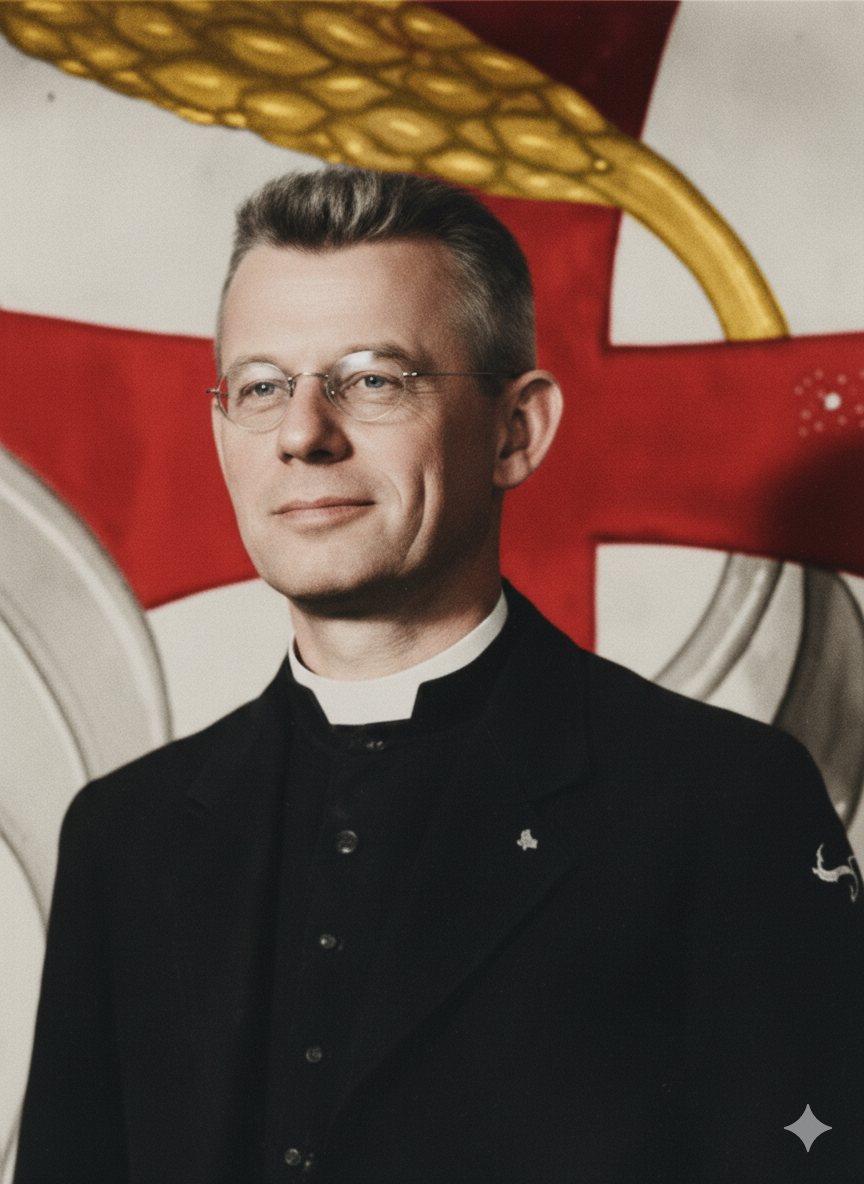
Photograph of Joseph Cardijn
Joseph Cardijn and the Sillon’s legacy
Born in 1882, Joseph Cardijn first encountered the Sillon’s writings in 1903, while studying at the major seminary in Mechelen, Belgium. In 1907, while at the Catholic University of Louvain, he attended Sillon study circle meetings just across the French border. There he witnessed teams of “young people, students, workers and employees, loving each other closer than brothers, assisting each other to develop their consciousness and to exercise their responsibilities.” When he launched his own study circles, Cardijn explicitly sought to develop a movement that would be “like the Sillon but more so, even poorer and more worker.”
When he founded the journal Le Démocrate in 1919, Cardijn articulated a vision of democracy in unmistakably Sillonist terms:
“Democracy is fundamentally a question of education and organisation. As long as the great principles of justice, fraternity, responsibility, competence, discipline and authority fail to penetrate our customs and morals, and fail to inspire our institutions and the exercise of power, democracy will exist only in name.”
Two years later, on behalf of the Belgian Christian Worker movement, Cardijn invited Sangnier to visit Brussels, where he explicitly linked his own efforts with the inspiration of the Sillon. The Sillon’s seed had been carried over the border by “the winds of the air and the birds of the sky” to Belgium where it had germinated and grown into a new movement that was part of “the great collective effort to raise the consciousness and the moral as well as the political responsibility of the working class.”
Unsurprisingly, Cardijn and his nascent Jeunesse Ouvrière Chrétienne (JOC) soon met opposition from those who viewed a class-based movement for young workers as divisive, and from those who feared its sociological “see-judge-act” method was insufficiently doctrinal. Here, Cardijn benefited from the Sillon’s post-1910 legacy in the form of Marc Sangnier’s peace movement, which had gained papal blessing. It also benefited from the rise of radical right-wing nationalism not only in the form of the Action Française, whose influence had also spread in Belgium, but also from a growing fear of Mussolini’s fascism and indeed Soviet communism.
Now finally the Church began to see the importance of the work of Sangnier and the Sillon. Thus, when, against all expectations, Cardijn secured a personal audience with Pius XI, the pontiff endorsed the new movement with the words: “At last someone has come to speak of the masses … The greatest tragedy of the nineteenth century … I make the JOC my own.”
Cardijn himself never forgot his debt to the Sillon, often borrowing from its iconic definition of democracy. Addressing the First World Congress on Lay Apostolate in Rome in 1951 he would say: “Only the defence of a doctrine and a social organisation respecting the person and the human family, conscience and human responsibility can maintain and develop in the world a personalism which guarantees dignity and liberty.”
Even more poignantly, the YCW would open its First International Congress before a crowd of 100,000 spectators on Sunday August 25, 1925, 25 years to the day after Pius X’s letter, a date still celebrated as the foundation date of the International Young Christian Workers. If the Sillon pioneered the method of forming conscious and responsible leaders in its study circles, it was the YCW that refined it and gave it the name by which it has become known across the world and been incorporated into Catholic Social Teaching.
At the Second Vatican Council in 1965, Cardijn himself articulated the connection between this method and the deepest purposes of education in freedom:
“This interior freedom, even if it exists in germ as a natural gift in every human creature, requires a long education which can be summarised in three words: see, judge and act. I have never wanted young people to live in shelter from dangers, cut off from the milieu of their life and work. Rather I have shown confidence in their freedom in order to better educate that freedom.”
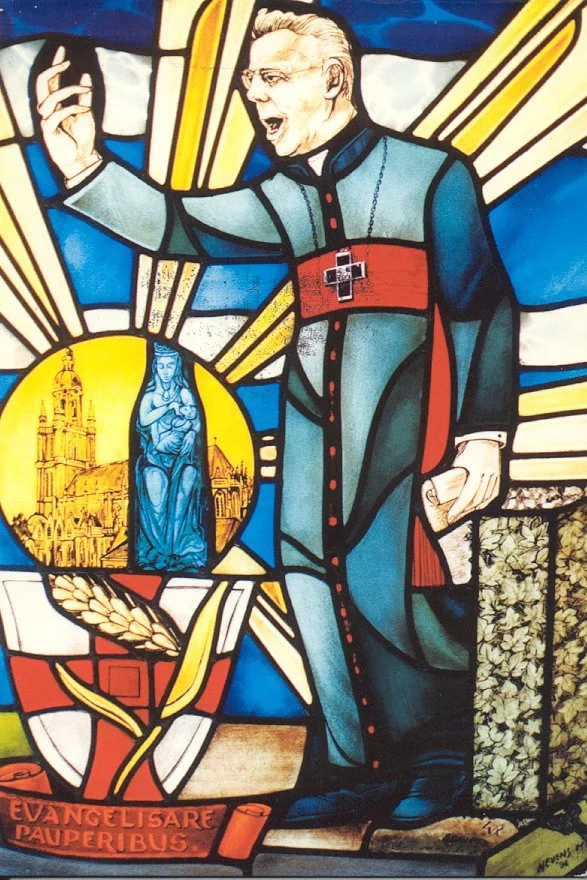
Stain glass rendering of Cardijn
The Catholic Worker and the YCW: The Sillon’s unfinished work
In his preface to a French edition of Peter Maurin’s writings, La Révolution Verte, Cardijn wrote: “Against Nazi and Soviet dynamite, which, after destroying Poland, threatens Europe and Christianity, Maurin’s dynamite is all we have to overthrow the idols and restore conquering optimism to the new crusaders whose mission is to save the Gospel.” He praised Maurin’s spirit as “the purest spirit of the Gospel” and celebrated the fact that Catholic Worker leaders “have been the disseminators of the good news of [the JOC] in the US.”
The convergence of the Catholic Worker movement and the YCW was not the result of chance but instead a shared inheritance: the Sillon. Its conviction that democracy required not just institutions but personal formation; that education must be mutual and rooted in life; that the role of the Christian intellectual was to stand with the poor and the worker, not as a benefactor but as a fellow seeker of truth. Both movements took that inheritance and developed it in distinctive ways: Maurin with Dorothy Day and the Catholic Workers’ houses of hospitality and farming communes of the “Green Revolution,” and Cardijn through the specialized Catholic Action movement of the Young Christian Workers.
As one of the last surviving Sillon leaders noted soon after the Second Vatican Council: “We knew we were right. We thought it would take 100 years for it to be recognised. It only took fifty.” The Council’s embrace of conscience, responsibility, and the reading of and acting upon the signs of the times—all Sillonist touchstones—vindicated those who had suffered the movement’s condemnation in 1910 and carried its spirit forward through decades of patient work.
The furrow that the Sillon ploughed—the seedbed of democratic consciousness, personal responsibility, and action rooted in faith—runs through the history of twentieth-century Catholic social thought in ways that have rarely been fully traced. Peter Maurin, the Sillon, and the YCW meet together in a single story: the story of how a group of students meeting in an underground room in 1890s Paris helped to change the Church and the world.