This is the third essay in our July-August 2026 forum on Personalism and the Catholic Worker.
The concept of sovereignty is at the heart of the political discourse of modernity and became a central theme for one of its greatest thinkers: Jacques Maritain. The French Personalist—motivated by both the burgeoning category of Catholic Social Teaching and his affinity for neo-Thomistic thought—wrestled with creating an alternative to the competing ideologies of his day: fascism, communism, and unrestricted free-market capitalism. The latter had begun to creep from an economic theory to a sociopolitical totality by the time Maritain’s philosophical canon was being formulated, and the former two were more than just specters as well. Maritain, who was largely responsible for creating the ethical lens of the United Nation’s Declaration of Human Rights, found these three political philosophies lacking in their ability to inspire human flourishing.
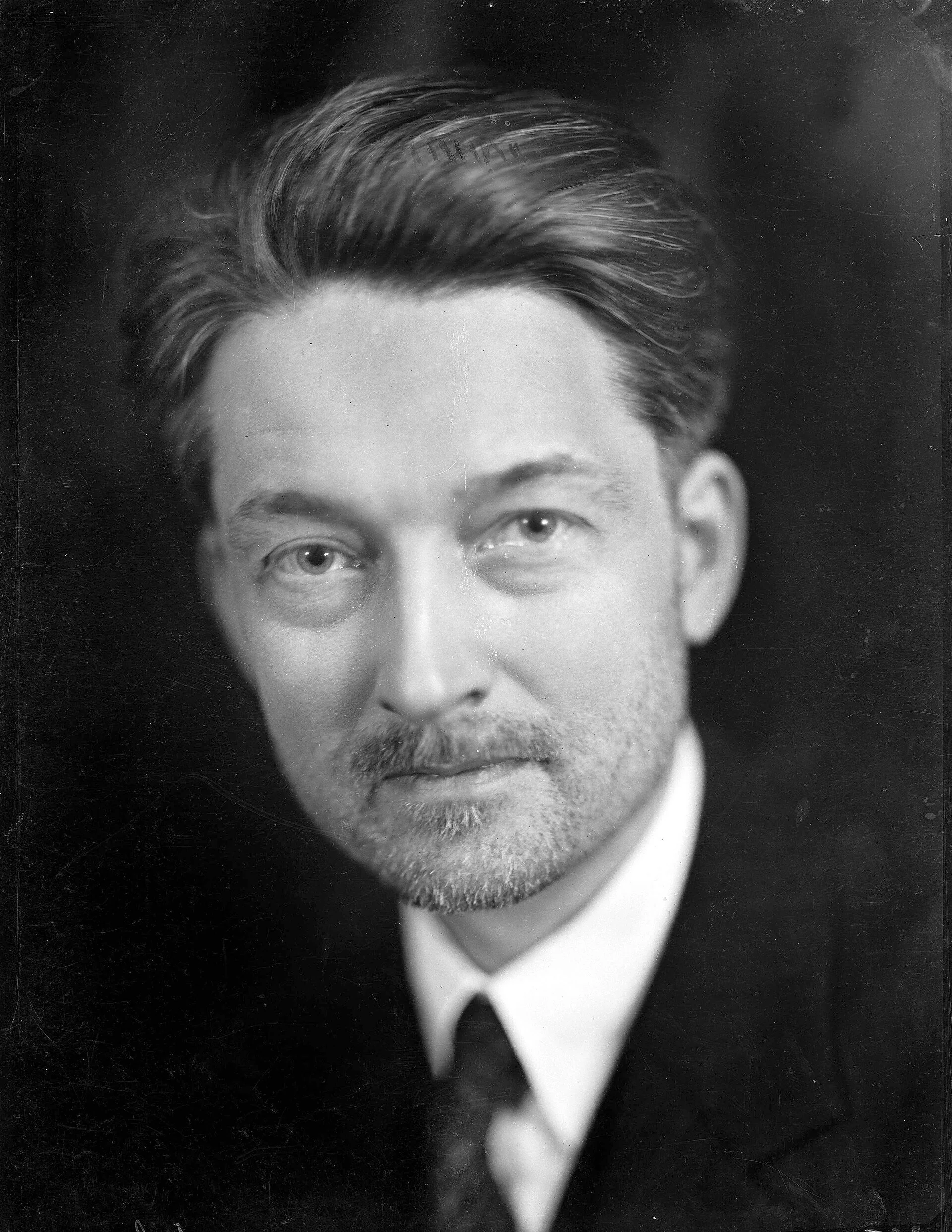
Jacques Maritain, c. 1930
The concept of sovereignty unites fascist, communist, and capitalist approaches to modernity. Sovereignty’s proper definition, function, and place within the sphere of political philosophy, and where it was to be found—in the State, in the individual, in the market, or in the proletariat—were central concerns at the turn of the century, a period in which revolutionary change (of any of the aforementioned flavors) was palpable. Pope Leo XIII’s Rerum Novarum (1891)—the catalyst for Maritain’s delving into the topic—even declared that there was nothing more pressing. As Maritain echoed,
No concept has raised so many conflicting issues and involved nineteenth-century jurists and political theorists in so desperate a maze as the concept of Sovereignty. The reason is perhaps that the original, genuine philosophical meaning of the concept had not been, from the very start, sufficiently examined and seriously tested by them.
The implications of sovereignty for Maritain revolved around the way in which it created, reinforced, and misconstrued the idea of the unlimited power of [insert whichever -ism you prefer] beyond that of the only truly “sovereign” entity, God. By extension, Maritain thought these approaches also negated the sovereignty present in all bearers of the Imago Dei, a blemishing that needed to be addressed for any thinker ascribing to Catholic Social Teaching, given its acknowledgement of every person’s inherent dignity.
Before delving into a discussion of how Maritain outlined a specific political philosophy aimed at combatting the misuse and abuse of sovereignty, it is necessary to examine French Catholic Personalism. The designation of any kind of Personalism as a school is one way to get off on the wrong foot: many strains of thought devolve from the central Personalist belief that at the heart of all reality is the concept of “the person” or “personhood,” including Phenomenological Personalism out of Berlin, the Polish neo-Thomistic stream that influenced Pope John Paul II, and the American “personal idealism” that impacted Martin Luther King Jr. Associated with this concept of personhood is the inherent dignity of every human being, not in the post-enlightenment hyper-individualized sense, but rather in the sense that personhood is fundamentally communal or communitarian. Maritain built on the foundations set by his mentor Emmanuel Mounier to illuminate the essential difference between individualism and Personalism, which Mounier captured in the trailblazing Personalism (1946): individualism “is a system of morals, feelings, ideas, and institutions in which individuals can be organized by their mutual isolation,” whereas Personalism views the person as “a presence directed towards the world and towards persons, mingled among them in universal space.”
For Maritain, this presence was not merely a theoretical construct but a social, political, and ethical one. Maritain transformed Esprit, the journal Mounier founded, into a communal movement fueled by discussion meetings at his Paris home that extended beyond classic intellectual boundaries to include actionable platforms, popularized publications, and a fervent focus on Christian praxis as a necessary component of spirituality. Rather than mirroring the salons of the French Enlightenment where bourgeoise intellectuals pondered existential questions at their leisure, the Personalists reflected a sense of urgency in their work as the aforementioned sociopolitical paradigms threatened the sanctity and flourishing of persons. For personalists like Maritain, our true vocation is found in praxis as opposed to theory. As renowned Maritain scholar Ralph McInenry shares:
Jaques Maritain did not see the faith he had been given as a mere garnish, something added to his workaday life in a more or less incidental manner, something that might lead perhaps to saying a prayer before sitting down to study. The Christian faith initiates a life, and grace is to pervade all aspects of it. This required Maritain to embed the intellectual life into the common Christian vocation, thereby transforming it.
This notion of vocation manifests itself most intensely in Personalist thought as the turning outwards towards others to truly know oneself, the belief that “the thou which implies the we, is prior to the I—or at least accompanies it” and therefore communication and mutual self-giving become central to the constitution of personhood. This formulation of others as subjects rather than objects is encapsulated by the five original actions as formulated by Maritain, which are present only within the physical–spiritual person as endowed by the Creator: going out of the self, understanding, sharing in the life of others, giving, and exhibiting faithfulness. As is evident, the social, political, and religious are key publics in which persons express themselves. With this context, I move towards Maritain’s explication of sovereignty.
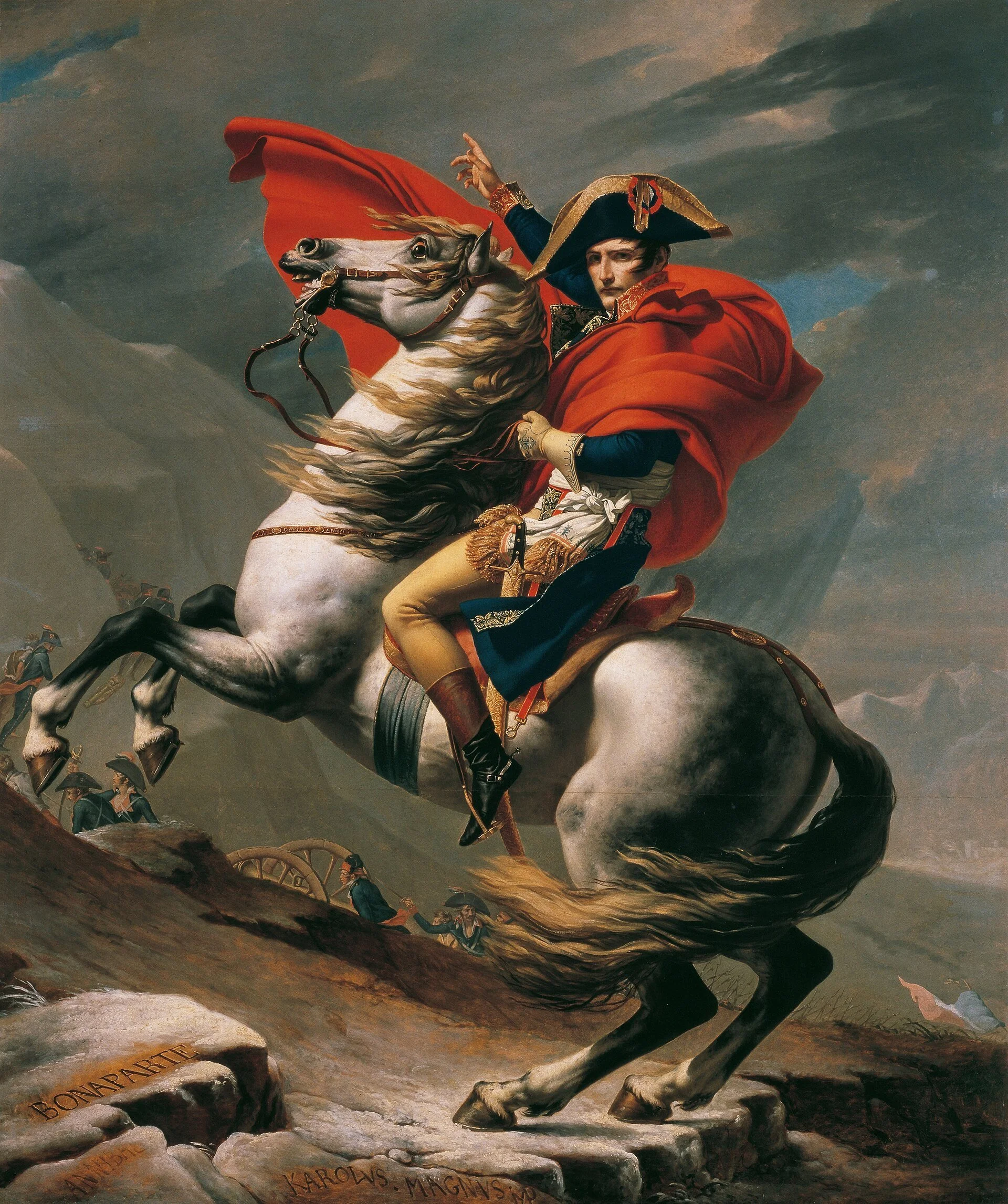
Jacques-Louis David, Napoleon Crossing the Alps, 1801
Maritain saw modernity—the world at the turn of the century—inherit its understandings of sovereignty from Hobbes, Rousseau, and Bodin, who had in turn largely borrowed their understandings from medieval constructs. The most common motif was that of the absolute monarch as complete and final holder of power. Maritain argues that the medieval concept was misinterpreted by those theorists in two ways. First, influenced by Thomistic thought, Maritain understood sovereignty as reserved for the Divine, highlighting it as a term where “independence and power are separately or transcendentally supreme and are exercised upon the body politic from above.” Thus, fascism, communism, and unrestricted free-market capitalism under the guise of democracy each placed undue ultimacy on categories that could never hold true sovereignty. Second, sovereignty, especially in Nazi jurist Carl Schmitt’s influential formulation, is often seen as an “exception” to the norm and an elevation above that which it “rules” rather than being encompassed as part of the whole or serving the common good despite its ruling function. Maritain clarifies that,
Here we are confronted with that which is basically wrong with the concept of Sovereignty and the original error of the theorists of Sovereignty. They knew that the right to self-government is naturally possessed by the people. But for the consideration of this right they substituted that of the total power of the commonwealth. They knew that the “prince” receives from the people the authority with which he is invested. But they had overlooked or forgotten the concept of vicariousness stressed by the mediaeval authors. And they replaced it with the concept of physical transfer and donation.
What Rousseau, Bodin, and especially Hobbes had missed was the inclusion of the sovereign within the body politic. They appeared to ascribe a certain material character to sovereignty, one which involved possession and ownership over the body politic rather than seeing it in terms of participation. For Maritain, sovereignty should not entail a sense of ownership over the rights of another. Instead, the sovereign has ownership only of participating in and acting for the rights of others, building a foundation for the subsidiary/communal nature of true sovereignty.
This can be more explicitly categorized with two specific critiques. First, Maritain argued that these theorists misconstrue the application of sovereignty to the monarch, permanently separating the sovereign from and above the “subjects.” This violates the fundamental autonomy of the body politic itself–no singular part of the whole can substitute itself and act supreme autonomously or without continuing consent. Second, behind the façade of “popular” sovereignty attributed to these thinkers is something sinister, according to Maritain. A transfer of power from the previously thought singular sovereign to a multitude, or the more aptly singular “common good,” is an abstraction that is distinct from individual persons and does not necessitate their flourishing. Maritain would argue that in these inscriptions of sovereignty we are confronted with a scenario in which the holder of sovereignty is free to act or decide without consequence and thus negates the freedom of human persons.
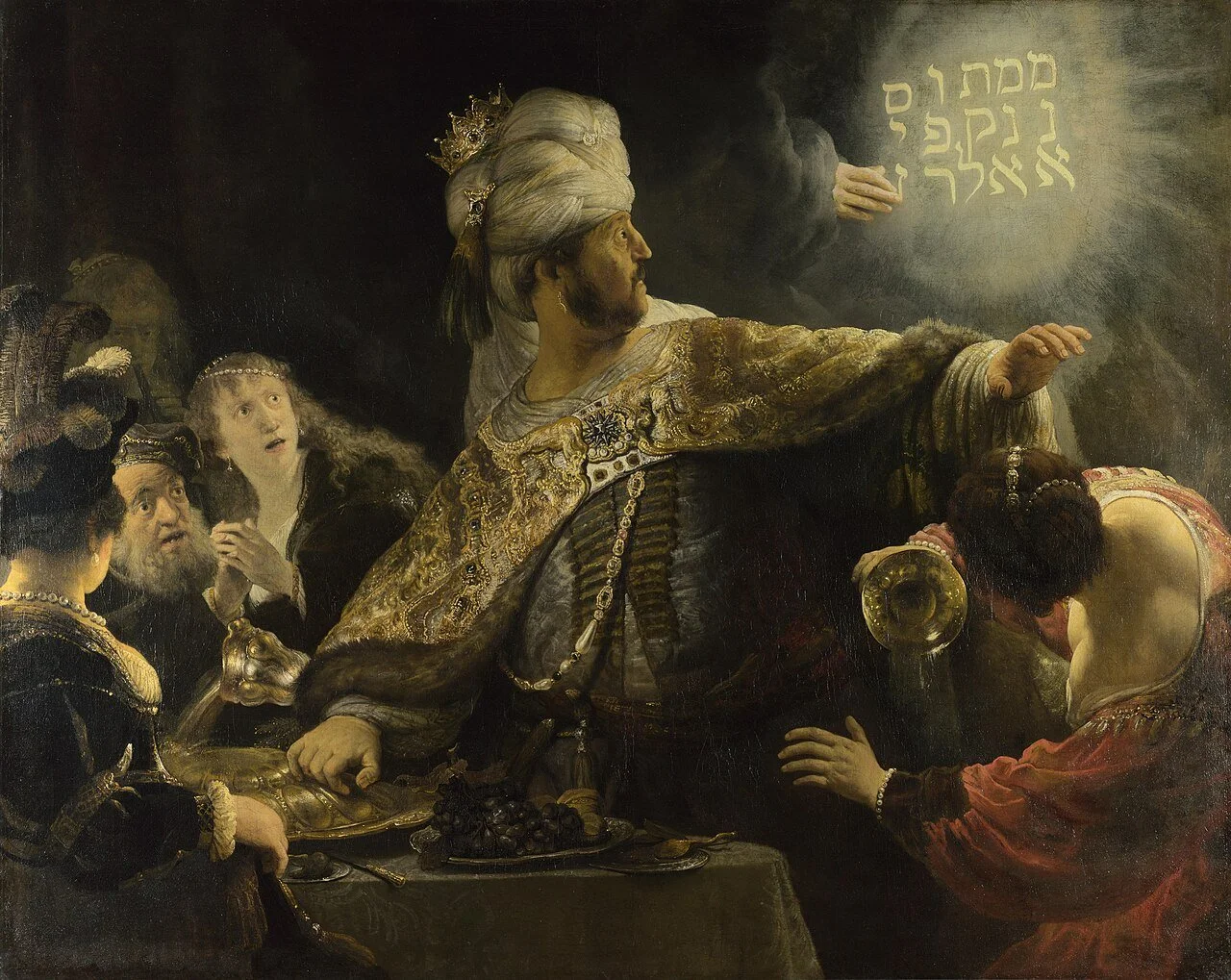
Rembrandt, Balshazzar’s Feast, c. 1635-1638
Following a Thomist trajectory, Maritain saw a proper understanding of sovereignty as revolving around two things: “First, a right to supreme independence and supreme power which is a natural right and, second, a right to an independence and a power which, in their proper sphere, are transcendently, not comparatively or as a topmost part in the whole.” Although absolute monarchs, and later dictators, nation states, “the party,” and the market, believed that they possessed such a sovereignty, categorically speaking, they could not have done so. Maritain uses the Hobbesian “Mortal God” model specifically to point out that the power wielded by what he would term “the most sovereign” or “highest sovereign” is in fact merely a common power bequeathed to them by a covenantal agreement with the governed. Thus, the Polis as a whole—or as Maritain prefers, the body politic—always takes precedence over “the most sovereign.” Conversely, this applies to the notion of popular sovereignty in that the common good cannot ever be fully separated from singular persons. It is with the possibility of individual persons’ full human fulfillment that the body politic and the search for a “common good” exists in the first place.
What Maritain is ultimately suggesting is that in the political sphere, there is no valid use or practical application of the term sovereignty in the dominant theories of modernity. In his neo-Thomism, no earthly power may be substituted for God, but rather “God is the very source of the authority with which the people invest those men or agencies, but they are not the vicars of God.” There is an ontological conclusion to be made with this understanding: no “sovereign” may be divided from human persons by way of an essential characteristic. Such a characteristic can only be “ascribed” but will never be fully manifested in essence or in the reality of the Polis.
What we are left with is the simple conclusion that such ideas of sovereignty within the sociopolitical realm must be abandoned entirely. The attempted translation of sovereignty into systems that argue that the State is the people personified, that the dictator reigns supreme, or that the market has the people’s flourishing in mind, can only lead to disaster for Maritain. More than just a theoretical critique, the above exploration reveals this to be true even in the humblest attempts of its inscription, and more devastatingly evident in those attempted inscriptions that act with a rigorist exclusionism. Despite claims of working for this moral good or that concept of order, the Personalists observed that political inscriptions of sovereignty often end up as examples of absolute power exercised without accountability. As such, there is no room for singular sovereignty within a philosophy centered on the well-being of persons.