In the summer of 2024, we were expecting. Mixed with the excitement of the baby shower and sharing the news with family and friends, there were feelings of uncertainty and unpreparedness. The moral and ethical questions around parenthood were so complex and profound, I found myself searching for some historical and philosophical footing that would enable me to navigate them. A few years prior, I had written a pair of essays on Climate Malthusianism and population ethics to begin making sense of emerging patterns in conversations about having children, but now the clock was really ticking.
This was when I encountered What Are Children For?: On Ambivalence and Choice by Anastasia Berg and Rachel Wiseman. The book helped to orient me in the disarray—the expectation, fear, hope, and subtle sense of the mysterious relationship I was about to enter into. And it also helped me part with the idea that I would ever feel ready for parenthood—intellectually or otherwise. I am thrilled to have had the chance to carry on a conversation over email with Anastasia and Rachel on this incredibly important topic.
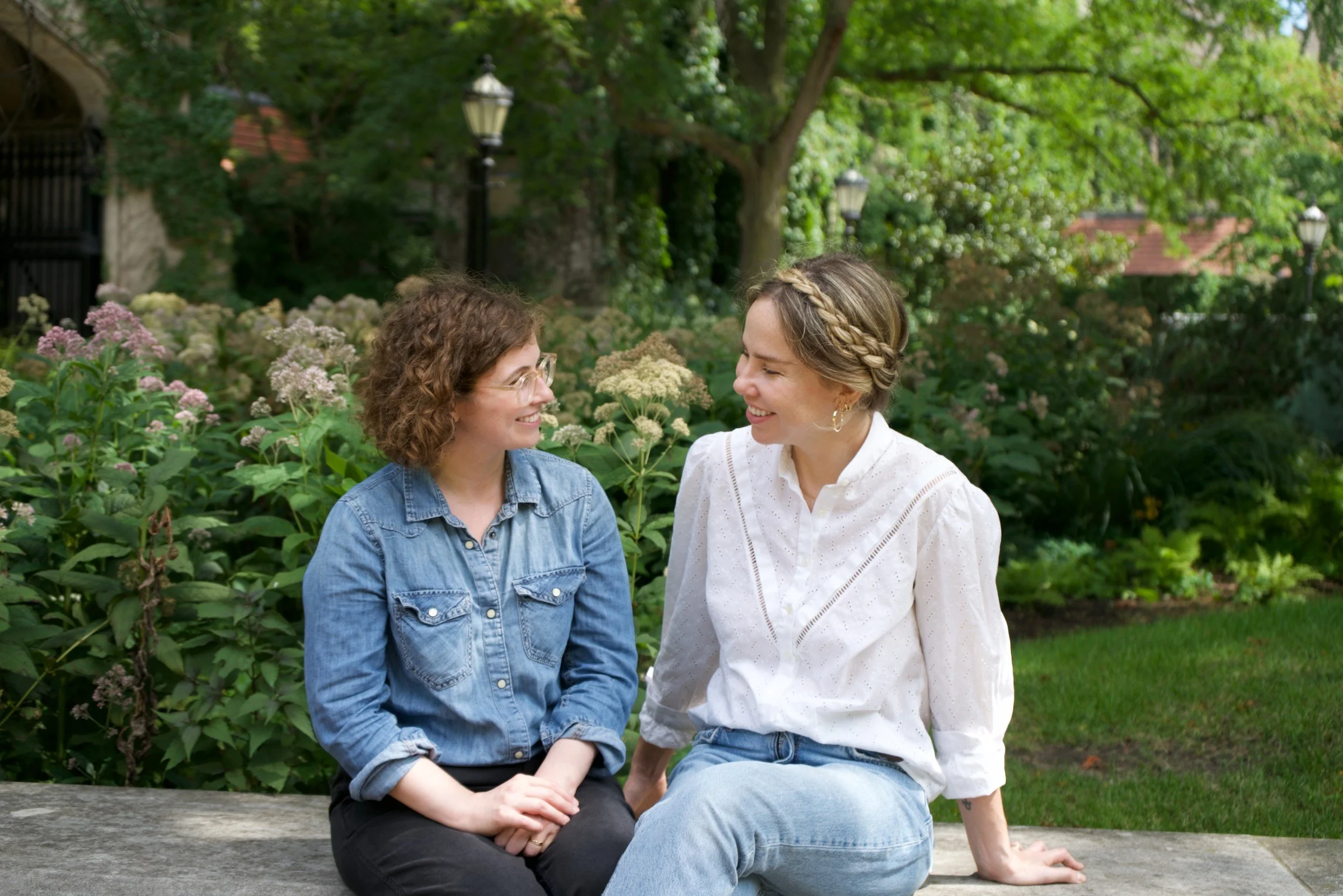
Anthony Shoplik: Could you start by introducing GenMod readers to your book’s main arguments? What are children for?
Anastasia Berg: Yes, but first it’s worth stating what might be obvious, which is that the title of the book is not meant in dead earnest. It is a little tongue in cheek. In posing the question “What Are Children For?” we were gesturing at the way this extraordinarily important question—the place of children in our lives, the possibility of a human future—so often gets framed today. Namely, in instrumental terms: Of what use are children to me? What are the pros and cons to having children? Are they worth the trouble? And one argument the book offers is that this way of approaching the question of children is very new and it may not be a fitting framework for it. For one thing, even if your children are likely to turn out fine—and even if you can make sense of the immense so-called ordinary sacrifices that a parent has to make for the sake of their children (material resources, time, emotional investment)—if you then consider that the many potential challenges and dangers they, and you, as their parent, might encounter over the course of their lives, the tragedies they might endure, it’s hard to see how anyone coming at the question from a purely instrumental perspective would ever choose in favor of them!
The book itself hopes to achieve two things: first, to analyze the growing ambivalence about having children and lift the burden of some of the scripts that we reach for in trying to make sense of that ambivalence. This section does not proceed by ordinary “argument.” We’re not trying to “debunk” the claims proffered by those who are struggling to approach the question of children. Rather, we invite them to think through their concerns in a way that might loosen the hold they have on them. We argue, for example, that behind what may appear to be a sensible apprehension about the (un)affordability of children is an even more deeply rooted worry about what it takes to be “ready” to become a parent today. Indeed, this anxiety extends well beyond finances into many different corners of our lives: it shapes how we approach dating and evaluate romantic partners, and even determines how we measure our own psychological “readiness” for having children. Across all these arenas we hold ourselves to standards of success and maturity that are so high and so indeterminate that we may never know if we’ve reached them.
In this vein, in addition to thinking through these obstacles of circumstance—money or the structure of modern relationships—we also examine ethical worries about having children that loom over people’s deliberations today. These are the concerns that having children is in tension with feminist ambitions, or that it’s immoral to have them—either because children will be likely to suffer in a heating world or because human beings are too flawed to deserve a future on the planet we’ve destroyed.
And the second ambition of the book, which is partly achieved through this guided working through of the sources of anxiety, hesitation, and moral doubt, is to direct people to the big philosophical question that one always faces, whether explicitly or not, when faced with the question of children: is human life worth perpetuating? And to recover a perspective from which it is possible to answer it in the affirmative.
AS: In what ways does the book posit a genealogy of modernity—a story about our break with the past—and in what ways is the story you tell one of continuity with the past, even the ancient world?
AB: We were very interested in the transformation of the role of children in human history. Economists and social scientists more broadly will sometimes try to explain declining birth rates by pointing to rise in the so-called opportunity costs of having children: how much they “cost” you not just in dollars and cents but also in terms of what you would be giving up by having children. The thought is that as various opportunities become more widely available—whether because women can now go to college and own a credit card or because more people can travel the world or devote themselves to a passion project—there are more and more things you could lose out on by having children. We think the change goes much deeper though: it’s not simply that opportunity costs have gone up, it’s that we’re approaching the question of whether or not to have children from the standpoint of these “opportunity cost” calculations at all. For most people, under most circumstances, having children used to belong to the very framework of life. It’s something you did, whether or not it was convenient. Think of the way that, for a certain demographic—including most of the people reading this, I’d bet—going to college was a given: the sort of thing you did whether or not, say, you had to borrow money to do it. For most of human history, people understood themselves intergenerationally, as having a past and having a future that extended beyond their lives and that they would be directly contributing to bringing about. So this is a radical break.
The question about continuity is very interesting, I don’t know whether I’ve ever been asked to think through it in quite this way before. One thing is that while the sheer volume and ubiquity of these worries is very new, the ethical concerns underlying them—about whether human life is good and worth perpetuating—have been raised for as long as we’ve been able to wonder who we are and what we are here for. And another thing we can say is that while many people find the rate of fertility decline to be really shocking—the global birth rate has likely tipped below replacement rate this or the previous year—what sometimes feels more surprising is the opposite fact: that so many people are still having children, despite all the countervailing forces. On sunnier days, this suggests to us that the calculative, instrumentalizing framework has not totally taken over—yet. Or maybe even more than that, since as having children becomes something you have to “opt in” to as opposed to “opt out” of, it suggests people are not just responding to the ancient call to affirm human life but are actively resisting the perspective from which that might no longer be possible.
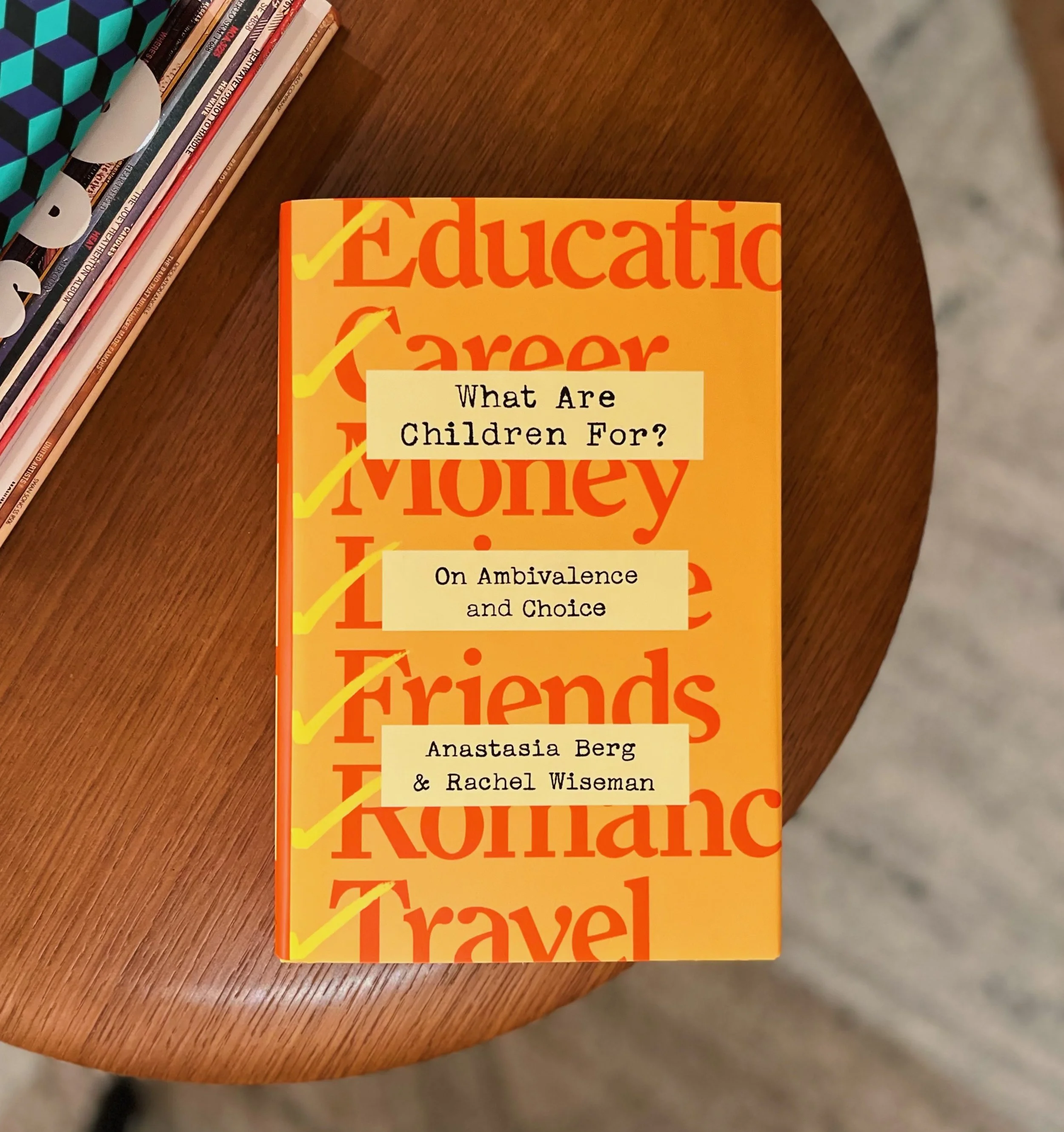
AS: The book was published in June 2024. How has it been received? Have you noted any patterns or surprises?
AB: The reception exceeded all our expectations. Given the extent to which reproduction has been politicized, especially in the U.S. after the repeal of Roe v. Wade, we had our worries about whether people would be receptive to a book that offered an anti-anti-natalist outlook from a liberal-progressive perspective, and it was incredible to see the enthusiasm with which it was received, from readers and reviewers across the political spectrum. Though I confess I was particularly tickled to see the responses from conservatives who were often almost baffled by the way in which we reached what appeared to be similar conclusions starting from very different premises!
Rachel Wiseman: Before we wrote the book, there was a dawning realization of the extent of the phenomenon of childbearing ambivalence but a notable silence when it came to engaging in a serious, open public conversation about it. The only appropriate way to approach this ambivalence, at the time, was to adopt a highly subjective, personal perspective—to say how this uncertainty and negativity figured in your own life. Many people we spoke to reported not knowing how to start a dialogue about having kids with their partners, their friends, their parents, or even themselves. One thing that has been exciting about the reception of the book is that it certainly coincided with, and I’d wager helped bring about, a real public conversation. And one reflection of that is the response we’ve gotten from younger readers, from Gen Z, that they intend to think and talk about these issues earlier, so that they don’t end up letting the clock run out on their decision-making.
AS: How does the book speak to our current moment, such as it is with the purported “vibe shift?” I’m thinking here about the rise of the “trad wife" and a kind of Nietzschean masculinity, among other things.
AB: When we started the book we knew we were touching upon something very important to our contemporary lives, a real source of confusion and anxiety, but of course we had no way of knowing how the public conversation would directly turn to children and family. Shallow answers to these questions abound on all sides of the political landscape (“obviously children contribute to climate change, so it’s wrong to have them!”; “obviously women are meant to dedicate their lives to the raising of children!”) But as with any question of real importance, the answers are never so simple. And indeed, when having children or not having children becomes a political signifier, something has gone awry. Our aspiration for the book was to help people break free of these sorts of political and cultural scripts to make authentic choices for themselves. We think the book will have a lot to offer to those who are looking to think through the shape of their own lives, the value of a human future and our current cultural moment more deeply.
Part II of this interview can be found here.
Anthony Shoplik is the Executive Editor at Genealogies of Modernity and a PhD Candidate in the English Department at Loyola University Chicago.
Anastasia Berg is an assistant professor of philosophy at the University of California, Irvine. She is an editor of The Point, and her writing has appeared in the New York Times, The Atlantic, the Times Literary Supplement, the Los Angeles Review of Books, the Chronicle Review, and elsewhere.
Rachel Wiseman is the managing editor of The Point. Her writing has appeared in the New York Times, The Atlantic, The Point, and the Chronicle of Higher Education.