The Genealogies of Modernity Journal


Existential Ponderings: A Review of Infinite Regress
Is life a gift? Or a calamity? Is existence to be affirmed, or avoided? The answer to those questions may very well depend on what you think about the possibility of forgiveness.
Jeffrey Wald reviews Johua Hren’s novel Infinite Regress

Emily Dickinson’s Unexpected Eucharistic Poem
She found herself alone with God, in her garden, religiously unaffiliated and sacrificially loved... She likely never partook in the Eucharist that she wrote about so lovingly.
Luella D’Amico on Emily Dickinson as precursor to the ‘nones’

Severance: of Body and Soul
If you give your soul to the enterprise, for the sake of your desire to live a meaningful life beyond its reach, you might be rewarded with the blessing of forgetting that such a life was ever possible.
Daniel Cunningham on the neoliberal wager

Bewilderment: Getting Modern Parenting Right and Wrong
A cultural product of its time, its value is more anthropological than literary. In an ideological age, what do secular, educated parents most want to believe about their kids?
Maya Sinha on parenting and literature in Powers and O’Connor

The Tragic and Triumphant in Skyfall and Maverick
Both films concede that technology shapes the future, but the determining factor in the life of heroes and of nations still seems to be not the gun or the plane, but the person behind the trigger.
Lauren Spohn on heroes and technological determinism

Top Gun, James Bond, and the Myth of Obsolete Heroes
Both Maverick and Skyfall encourage us to read the life of the nation in the life of the hero... When we talk about the course of the hero’s life, we’re also talking about history.
Lauren Spohn reflects on similarities between James Bond and Maverick

The Deep Eighteenth Century
It is this backward glance, careful and sustained, at who we used to be, that will give us back the image of who we are now and what possibilities the future might hold.
Kirsten Hall considers the appeal of the 18th century and “2001: A Space Odyssey”

(Up)rooted Sin in Katherine Anne Porter’s Noon Wine
Porter narrates how the things we choose to notice reflect the people we become… She encourages readers to pay attention to the warning signs that could lead to our own fates if we fail to keep watch.
Casie Dodd recovers Porter as a Catholic writer

A Love Letter to Ariadne auf Naxos
Our life is fuller and lovelier for variety. At one moment we might need Lizzo, at another Liszt, but ultimately both, or their like, should find their ways into our lives and into our playlists.
Jacob Martin on Richard Straus’s opera and diverse cultural experiences

Faintly Contemptible Vessels
We inheritors of the Cartesian dream believe that if we had enough knowledge, we could know the past and the future and could banish the fictions which for a hundred millennia have spelled our ruin.
Daniel Fitzpatrick on James Joyce and Thornton Wilder

Writing After Girard: Part II
If the fiction writer accepts the imitative laws of human interaction, then Rene Girard’s mimetic theory puts him in a tricky spot.
Trevor Merrill on writers and the problem of mimetic desire

Writing After Girard
Girard is not only an academic theorist but a veritable agent of culture who has shaped the thinking of writers around the world…. But where there is influence, there is also the potential for anxiety.
Trevor Merrill on novel writing after Girard

The Situation for Women Writers
Neither limited to nor ignorant of the important but circumscribed sphere of domestic life, the finest women’s writing highlight the ways in which private and public life intersect, overlap, and coinhere.
Katy Carl on Virginia Woolf and Sigrid Undset

Inevitable Time in Romeo and Juliet
Time collapses on itself as Romeo’s lingering warmth betrays the truth of his death. He lived only moments ago. And now, Juliet is only moments away from ending her own time in this world.
Krystal Marsh on the warmth of lips

Poetry as Finding Through a Falling Away
What’s different about this idea, from either Claudel or Maritain, is that poetry does not call into being through naming: it finds.
Tom Break on Anna Key’s poetry and what art does

Waiting on Value
The possibility of an event, of perceiving a thing in the difficulty of what it is to be, of a momentary vision with an other-worldly value, is necessarily predicated on a certain degree of silence.
Tom Break on patience and contemplation

Comedy and Conversion in Marcel Proust
Something happened between Proust's early efforts and his mature masterpiece, a paradigm shift that made the author capable of transferring his legendary gifts as a comic dinner-table raconteur 'onto the page.'
Trevor Merrill on Proust’s conversion

The Value in a Foreign Song
Something, outside of human reason, outside of human meaning and of human feeling, has reached him. “The bird sings.” And the speaker hears it.
Tom Break on hearing goodness in being

Art and the Work of Holding onto Hope
Every aspect of our existence is shot through with value, and it is inconceivable to think outside of this value-replete framework. So, how do we fit in an unmade world, in a world devoid of value?
Tom Break on art, value, and a meaningless world
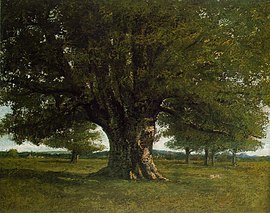
Three Lessons in Beauty
Anyone who has sought to make or comprehend art has probably come across at least a few lessons on beauty—insights that, it seems, can never be exhausted.
Trevor Merrill on lodestars of aesthetic judgement