The Genealogies of Modernity Journal


Delta Winter: Faulkner’s Nature and Repudiation
The Faulknerian gaze, turning as much to Greece and Jerusalem as to the big woods of the Mississippi Delta, calls in the grandest distillation of the modern tongue for the restoration of our memory.
Daniel Fitzpatrick on reading Faulkner's “The Bear”

Contemplatives in Conversation on Cinema
Pier Paolo Pasolini’s film The Gospel According to St. Matthew presented Jesus in a uniquely modern way. Pasolini was an atheist, and his film didn’t glorify or sentimentalize the story of Jesus.
Arthur Aghajanian and Michael Marciel in conversation
Converting Conversions
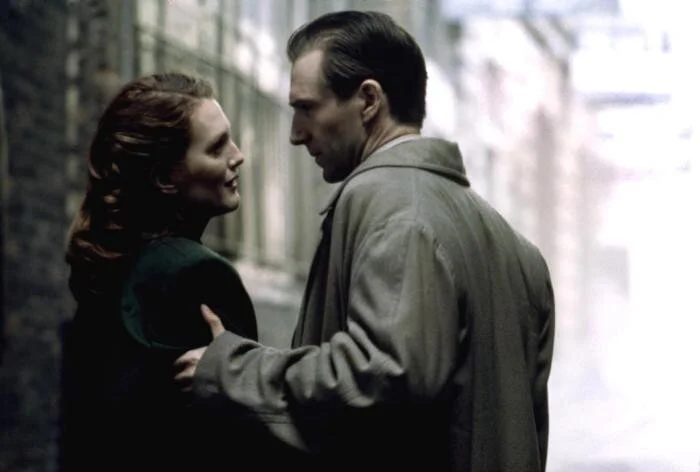
If we are open to other readings of this multi-layered love story, we can discover new elements of what it means to “fall into faith as one falls in love.”
Casie Dodd assesses a second film version of Graham Greene’s The End of the Affair

Titian's Icons for a Modern World
Christopher Nygren’s aim is to recast Titian’s oeuvre by focusing on a series of deeply religious paintings and to make the reader consider the artist’s career and legacy anew.
Catherine Powell-Warren reviews Titian’s Icons

Conversions on the Page and on the Screen
Adapting the Greene’s “The End of the Affair,” these films show the many ways conversion can play out in a modern culture often inhospitable to the human capacity for faith.
Casie Dodd on religious conversions in movies that happen to mention Catholicism

Stories on the Side of Grace
We live in the age of technological magic, not supernatural grace and miracle. Not so fast, says Alexander Theroux.
Jeffrey Wald reviews Alexander Theroux’s Early Stories and finds a little grace

The Guilty Pleasure of Sally Rooney’s "Beautiful World, Where Are You"
The protagonists of “Beautiful World” are no longer confessional, but resigned. Their attitudes towards politics and religion alike are structured by ambivalence.
Kathy Chow reviews Sally Rooney’s latest meditation on modern life

Gatsby and the Loss of Time
Gatsby believes in the future. He trusts in that future where the past will be present again. It is the present that escapes him, and so he falls from the glory he has gathered to himself.
Daniel Fitzpatrick on having all the money and none of the time

Secular Sacraments
Bypassing the quadrille of courtship, Joukovsky repurposes the marriage plot as a witty, unsparing dissection of human vanity and a quasi-sociological look at the mores of America’s de facto aristocracy.
Trevor Merrill reviews A. Natasha Joukovsky’s sparkling, multifaceted debut novel, The Portrait of a Mirror

Demons of the Green World: From Caliban to Anthony Blanche
In remaining unknown, in speaking from the eccentric radicality of their own linguistic-ontological complexes, Caliban and Anthony become the voices of aesthetic criticism within their worlds.
Daniel Fitzpatrick on critique from margins

Art Museums and the Modern Imaginary
Presentism is an obsession with the present that forgets its relationship with the past, that covers history and humanity with a blanket of generic sameness that muffles difference and dulls memory.
Donato Loia reviews Charles Saumarez Smith’s The Art Museum in Modern Times

Complaining about Incarceration
The notion that the people suffering from mass incarceration could testify truthfully about the system’s horrors was, and still often is, contentious. . . . Even more controversial: the idea that incarcerated people can critically analyze their position.
Luke Fidler on complaint and justice in prison

Death with Dignity
We are not isolated individuals… We are social creatures dependent on one another. If our life has an enormous social element, might not our death likewise?
Jeffrey Wald considers death in Christopher Beha’s What Happened to Sophie Wilder

The Music World Needs Haydn
Haydn condenses whole universes into his symphonies. Emphasizing his folkishness at the expense of his elegance, his grace over his passion, his control over his weirdness is a disservice to the world.
Jacob Martin on Haydn and renewing orchestral music
Shakespeare on the Theological Origins of Modernity
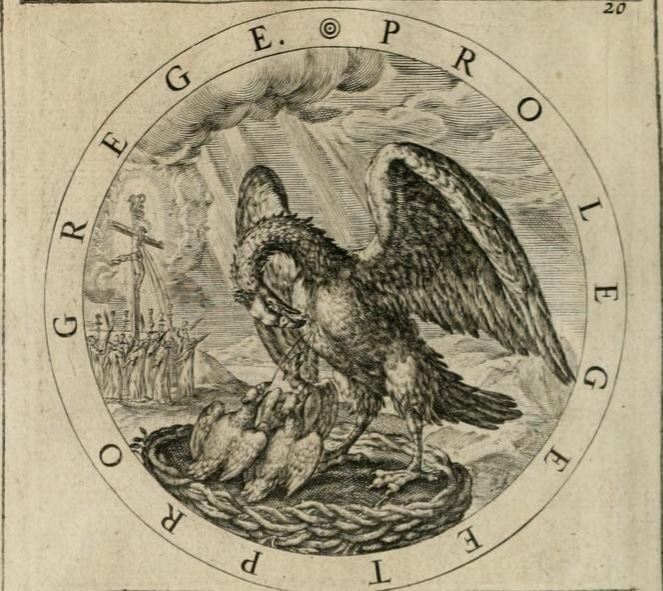
All of these restorations in “Richard III” are contingent upon the reinstatement of sincere eucharistic participation—Holy Communion . . . where rituals are revivified, and where communion—real Communion—can materialize.
Daniel Zimmerman finds a counter-modern theology in William Shakespeare

Racializing Art: A Baleful Genealogy
It is no longer possible to ignore or undersell the impact that racialized and overtly white supremacist ideas have had on art history.
Christopher Nygren reviews Éric Michaud’s Barbarian Invasions

Wendell Berry’s Genealogy of Place
To be connected to a place, to a genealogy, to a community, to a person, requires unconditional love, God’s love; only in this can modernity find what it is truly looking for.
John-Paul Heil reads Hannah Coulter and finds a genealogy of place and, ultimately, love

Power Made Perfect in Weakness
Marked by the Spirit with that indelible birthmark, as the Priest wanders, he wanders towards God instead of away. Perhaps Graham Graham too felt this relentless pursuit as an agnostic Catholic, felt the pull of a God who will not let you go.
Shemaiah Gonzalez on a literary saint for modern times

A Vocation to Heal: On Medicine and Morality
Physicians must acknowledge that our wellness comes from embracing our authentic identity, not from a pursuit of individual happiness. The great challenge that lies before us is not so much to heal humanity or to heal ourselves, but rather a renewal of the search for our lost communion.
Michael McCarthy on Walker Percy, medicine, and service of others

Misdiagnosing Shakespearean Modernism
These Shakespeareans wish to see the playwright as a progenitor of their own project of exposure, disenchantment, and social critique. Their readings contort the histories to make them accord with modern sensibilities.
Daniel Zimmerman on making a modern out of Shakespeare