Word on Fire launched its literary imprint, Luminor, this spring on a manifesto borrowed from Maritain: it would publish “art with all its teeth,” work good enough for any secular house, with Flannery O’Connor as its patron and the express conviction that literature is not catechesis by other means. Then it chose, for its inaugural title, the only novel by the most prolific apologist in the English-speaking Catholic world. An Ocean Full of Angels is Peter Kreeft’s single venture into fiction—written across two decades, first published by St. Augustine’s Press in 2011, now revised and reissued at 432 pages—and it arrives carrying the exact problem the imprint was founded to solve. It is a book that knows literature is not catechesis, and cannot stop catechizing.
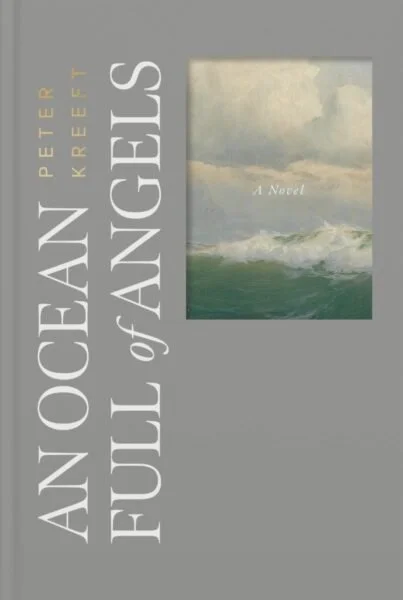
The Word on Fire-Luminor edition of Kreeft’s novel
Begin with the subtitle, the boldest thing on the cover: The Autobiography of ‘Isa ben Adam. The name is a small ecumenical argument in itself. ‘Isa is the Qur’anic Jesus, the Arabic prophet-Messiah. Ben Adam is Hebrew, not Arabic: the idiom behind the Gospel’s “Son of Man,” and, more plainly still, the Hebrew for any human being—son of Adam, everyman. An Arabic given name welded to a Hebrew patronymic: the collision the book is about, encoded before a page turns. And autobiography is the genre of testimony, first-person witness—which is the apologist’s instinct transposed whole into a fictional “I.” Kreeft frames the novel as a found manuscript, three cartons of a vanished student’s notebooks handed to a philosophy professor named Kreeft and published, he tells us, because of September 11. The narrator opens: “I am a failed Messiah.” Four paragraphs on: “This book is my confession.” An autobiography of ‘Isa promises the one document Christianity does not possess—Christ in the first person—and then delivers a Muslim everyman on the rocks of New England, confessing not triumph but failure. The gap between the promise and the delivery is the whole book.
What follows is less a novel than what Northrop Frye called an anatomy: the encyclopedic, digressive, idea-stuffed form whose engine is the catalogue and whose model is Burton’s Anatomy of Melancholy. The extended subtitle runs to forty items—“the connections between Jesus Christ, Muhammad, dead Vikings, sassy Black feminists … the dooms of the Boston Red Sox … the ecumenical jihad … and the end of the world.” It reads like a table of contents for the lectures Kreeft could not bear to leave out, and he has said as much. After finishing the manuscript he cannibalized it—his word. He extracted the philosophy into five separate books—on the sea, on surfing, on the theory of everything, on moral relativism, on Islam—because they “cluttered up the story, so I had to evict them from its premises.” It is the most useful thing Kreeft has said about the book, and it diagnoses the book’s permanent condition: its meanings are evictable. You can feel where the organs were removed. The protagonist was among them. ‘Isa turns up as a dialogue-mouthpiece in at least two of those spin-offs: in Between Allah and Jesus: What Christians Can Learn from Muslims he is “an articulate and engaging Muslim student” who debates Christian professors about prayer, abortion, and war. The narrator whose confession this purports to be moonlights elsewhere in Kreeft’s corpus as a controversialist’s foil.
And yet a real novel survives the surgery, and it is better than the apparatus around it would lead you to expect. The early chapters—“Papa,” “Mama,” “Night”—are sustained, restrained, and genuinely mortal. They turn on the deaths of a fisherman father and a cancer-stricken mother, and they are built on an image the father gives the boy: there is an angel in the sea, and the waves are its breathing. What is striking is that Papa, the moral center of these pages, refuses to certify his own story. “Now this is only a story,” he says. “Maybe that’s just a beautiful story. I don’t know whether He really uses an angel or not.” The four-year-old presses him—is it true, or only beautiful?—and the father will not say. This is the book’s finest instinct, planted early: a refusal to certify the supernatural that runs from the father’s mouth all the way to the novel’s last ambiguity. When Papa dies, the prose has the clinical economy the rest of the book lacks: “Three days later Papa drowned in his angel.” And then: “Papa was a good swimmer, but not with part of his head on a rock.” The title’s consoling image is also the thing that kills. Here, Kreeft trusts the reader.
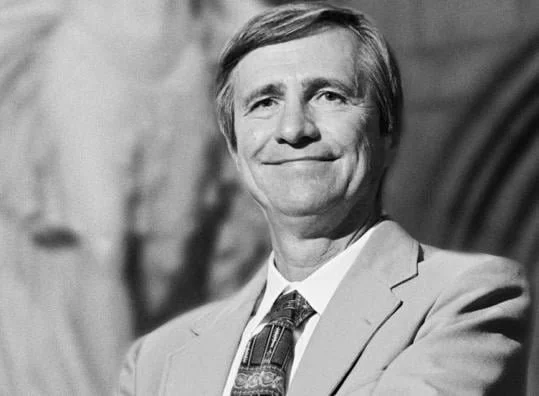
Portrait of Kreeft at Boston College, CC 3.0
And the wound is built into the structure. Years later, bowing over the rock where his father drowned, the son keeps hearing the sea repeat one altered word: the angel did not leap into the water, the voice insists, but fell. The gap between a leap and a fall—between the descent of love and the descent of Lucifer—is planted here and withheld until a chapter far downstream. A scrapbook does not do that. A novel does.
“Mama” is quieter and just as sure: a mother who hides her cancer so her son can finish school, and who, on her last night, prays the Holy Family into the vacancy she is about to leave—“Heavenly Father, You must be his Papa. Jesus, you must be his brother. Mary, you must be his Mama.” By “Night” the orphaning is complete, and the chapter walks the boy to the edge of the cliff where his father drowned. What it renders there is the genuine article—not a metaphor for despair but the will-less arithmetic of it: “I felt no hope and no fear … I had already died.” He is ten feet from the edge when an enormous woman comes bounding down the hill, calling one word into the storm—“JESUS!”—and the word stops him, working, he says, “like an incantation.” It is his own name; ‘Isa is the Arabic Jesus, and the syllables that haul him back from the rocks are the ones he carries. Whether the woman was an angel or a neighbor with good timing, the book declines to say, and does not need to. This is the novel Kreeft can write when he forgets he is Kreeft.
This is the first part of a two-part review essay. Check back next week for the second installment.
An Ocean Full of Angels
Peter Kreeft
Word on Fire Luminor
$28 | 432 pp.